Artwork Delivery Logistics: How to Protect Artwork During Transport and Installation
Moving artwork safely is more involved than simply loading pieces into a vehicle and hoping for the best. Whether you are relocating a residential collection, coordinating artwork for a commercial office, or preparing pieces for installation, the planning behind transportation and installation directly affects both safety and presentation.
Professional artwork handling reduces risk, improves efficiency, and helps ensure artwork arrives ready for display rather than repair.
If you need professional support with transportation, delivery, or installation services, visit /art-delivery-services or /artwork-installation.
Why Artwork Delivery Requires More Planning Than Standard Moving Services
Artwork is often fragile, oversized, irregularly shaped, or highly valuable. Unlike furniture or general freight, artwork requires specialized handling practices to prevent:
Corner damage
Surface scratches
Frame separation
Glass breakage
Environmental exposure
Improper mounting after delivery
Every project starts with understanding the piece itself:
Size and Weight Considerations
Large framed artwork, mirrors, and oversized canvases often require different transport methods than smaller framed pieces. Weight distribution, lifting strategy, and installation hardware all matter.
Material Sensitivity
Canvas, acrylic, glass, paper, and mixed media all respond differently to vibration, temperature, and humidity changes.
Packaging Methods That Reduce Risk During Art Transport
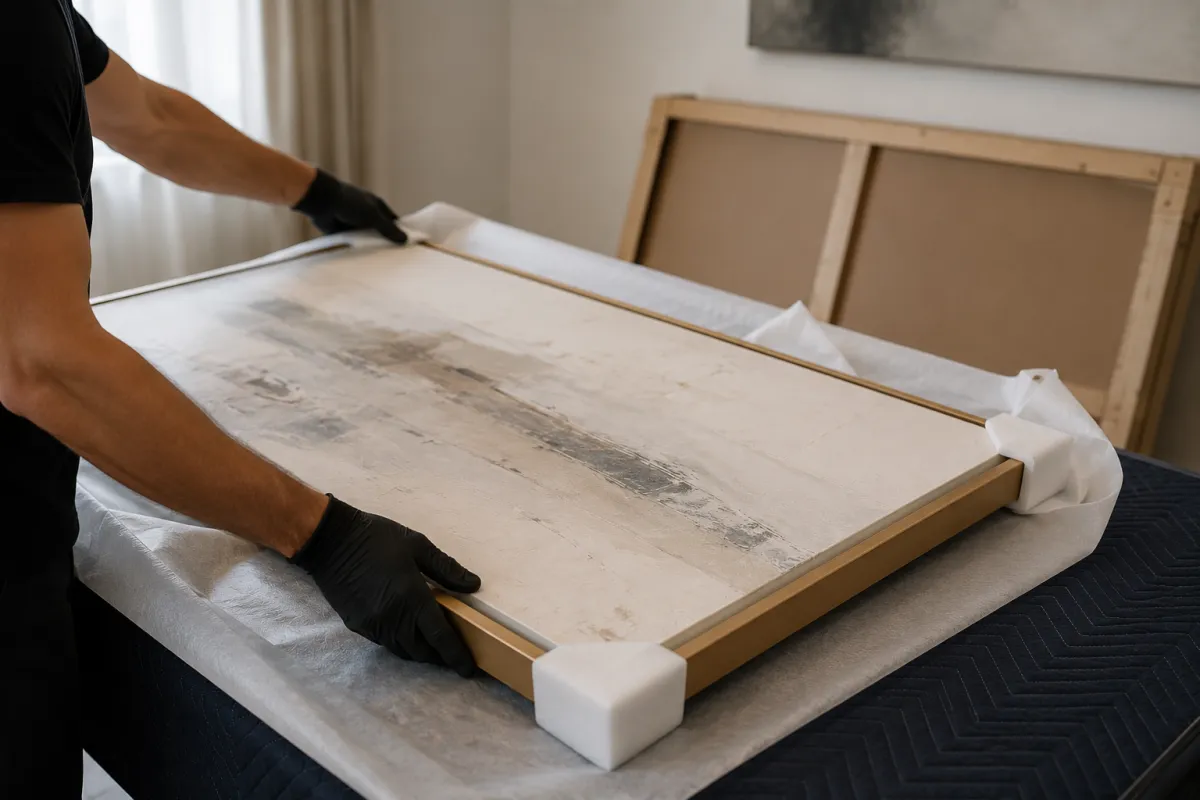
Packaging is often where problems begin. Generic moving materials frequently fail because artwork shifts, flexes, or absorbs impact differently.
Recommended protection methods include:
Acid-free wrapping materials
Foam corner protection
Rigid backing boards
Custom crate solutions for oversized pieces
Soft separation layers between surfaces
Avoid allowing packaging materials to sit directly against delicate finishes or textured surfaces.
Transportation Best Practices for Artwork Delivery
Safe transportation depends on more than careful driving.
Route Planning Matters
Planning access points, elevators, stairwells, loading zones, and timing can reduce unnecessary handling and delays.
Climate Considerations
Artwork can react to extreme heat, cold, and humidity swings. Stable transportation conditions help reduce warping, condensation, and material stress.
Secure Loading Procedures
Artwork should remain upright where possible and properly secured to prevent shifting during transport.
Installation Is Part of the Logistics Process
Delivery is only one part of protecting artwork.
Proper installation ensures pieces remain level, secure, and appropriately supported for the wall material and weight involved.
Common installation considerations include:
Drywall vs concrete mounting
Heavy mirror support requirements
Gallery wall spacing
Commercial installation coordination
Artwork height and placement strategy
When Professional Artwork Handling Makes Sense
Professional handling becomes especially important when dealing with:
Oversized artwork
Commercial projects
High-value collections
Multi-piece installations
Designer projects
Large mirrors or heavy wall pieces
Professional coordination often reduces damage risk while improving efficiency and presentation quality.
Final Thoughts
Artwork delivery logistics directly affect how artwork arrives, how it performs over time, and how it looks once installed.
By using proper packaging, transportation methods, and installation practices, artwork can move safely from pickup to final placement with significantly lower risk.
If you are planning an artwork installation project and need picture hanging services, delivery service, or large artwork move, investing in proper handling is often less expensive than correcting preventable damage later.
